

Hobbies and Interests
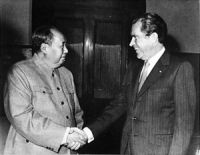 "This year marks the 30th anniversary of the restoration of diplomatic ties between America and China, which proved a dramatic turning point in the cold war" ---The Economist, October 24th~30th 2009.
This is a timely article by Kong Shiu-Loon (1953).
Click here to enjoy it.
Since 1950, Psychology, branded as imperialistic, has been banned in China. In 1981, a professor of the University of Toronto speaks to an audience in Shanghai on the recent development of Psychology in the West. He believes, “If China was to meet the world, her decision makers must … approach the world as it is, a multi-dimensional constellation.”
Click here to read the whole article.
 This is #3 in the series of China Meets the World. The author speaks to Dr. Wu Yi-Fang 吳貽芳, in 1972 and 1976. Dr. Wu (1893-1985), the first president of the first women's university in China, was a great educator. She contributed significantly to modern China, from the 1911 Revolution on, and through the turbulent years of the Sino-Japanese War, the Civil War, and then the Cultural Revolution.
This article presents brief exerts of their conversation on Dr. Wu’s work in the most difficult periods of Chinese history.
Click here to read the whole article.
(1928年,吳貽芳任金陵女大第一任校長時在校園內留影)
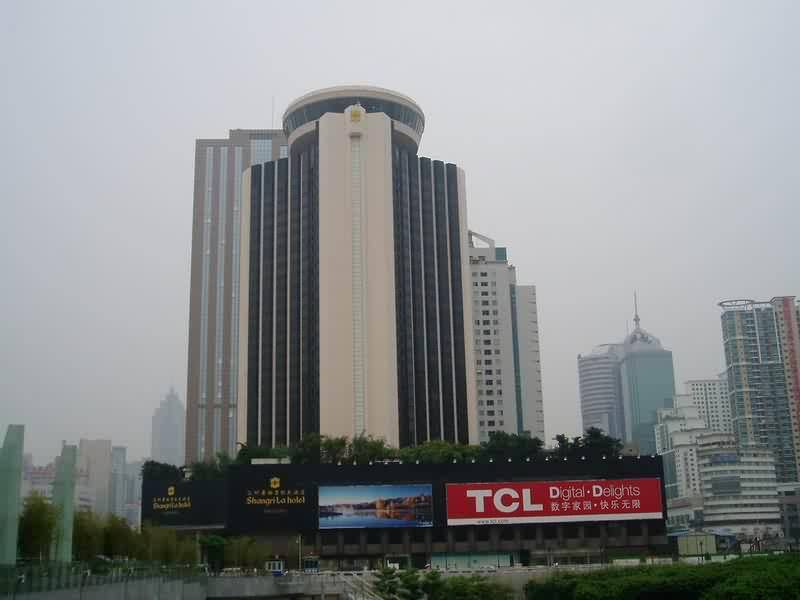 The 4th article in this series, The Miracle, traces how Shenzhen has become the second largest economic city in China, after Shanghai. In 30 years, this small muddy check point, with a name meaning ‘Deep Ditch’, has developed into a modern metropolis. The author attributes its success to the Power of Being Free. Please click the Features Page to read the article.
In this article, the author recounts his meeting with Zhou Pei Yuan 周培源, Fung You Lan 馮友蘭, Qian Wei Chang 錢偉長, Guo Moruo 郭沫若, Fei Xiao Tong 費孝通 and Su Bu Qing 蘇步青 in 1970s. "All these scholars were well educated in the Chinese tradition. They also had rich and notable experiences in universities outside of China when they were young..."
Click here to read the whole text.
 Expo67 took place in Montreal with the theme, "Man and His World".
 Forty three years later, Expo2010 opened to the world in Shanghai with the theme, "Better City, Better Life".
S.L. Kong (53), who was involved in designing the Canadian Pavilion in Expo 1967, visited Expo2010. He shares his thoughts in an article in the Features Page. His expo album is on the Pictures Page.
 Shanghai, known as the Paradise for Explorers (冒險家的樂園), has gone through many changes.
“… in the years of 1947-50, … refugees from China rushed into Hong Kong … as we, students of Wah Yan College Kowloon, encountered them joining our classes in large numbers. The Shanghai boys spoke better English, were Catholics, and appeared generally confident.
… in May 1973, ... The streets were filled with thousands of running bicycles.
… the city planners had done an excellent job, by building a network of overpass highways to extend Shanghai outwards, like the pictorial structure of its old name, Shen 申, with a main cross surrounded by a square. It eased much of the original inner-city traffic congestions, and connected Shanghai to all the thriving neighbouring cities in the Yangtze River delta region.
… Teachers and professors were branded “rats dashing across streets” 過街老鼠 during the Cultural Revolution, to be beaten by everyone, especially pupils and cadres. Their salaries existed on paper only. Twenty years ago a full professor received $270 per month. Beginning about ten years ago, there had been no fixed salary for professors, even in the same university
… And, once again, Shanghai is a new paradise for new generations of explorers, who care not to exploit, but to share in the creation of a fair and commonly aspired future.
… Yet, the fact speaks loudly. A new approach is working effectively. It may mean that China is meeting the world on its own terms. It will be up to foreigners to learn how ‘offices’ operate in China.
… Today, the statue of Chen Yi 陳毅 stands where, one hundred years ago, a plaque stood to degrade the Chinese people. It said, ‘No Chinese and dogs allowed here’. ”
Click here to read the whole article.
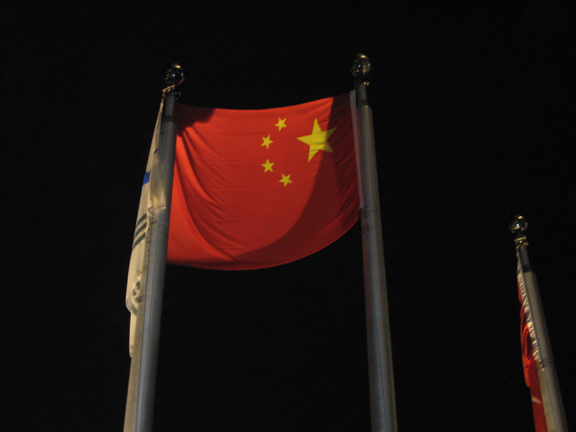 This ends the series of China Meets the World. It is subdivided into
Overview,
Culture and Cultures,
The Unjust Past, Lingering Effects,
The Task of Rebuilding,
Forces from Abroad and
The Future.
The author, Kong Shui Loon, concludes: "No one knows the future, not tomorrow, the next year, or the next century. But human beings are still time-bound. We are able to look back to the past in order to understand the present and what is to come. I have unveiled the various living dimensions of China and the Chinese in recent history to describe how and why history had proceeded the way it did. If I am allowed to end this series with an optimistic note, I would say that of all the individuals that I had depicted in my writing, there are thousands and thousands like them to come. They will meet the world on their own independent terms, courteously, caringly, and harmoniously, in accordance with THE CHINESE WAY."
Please click here to read the whole article.

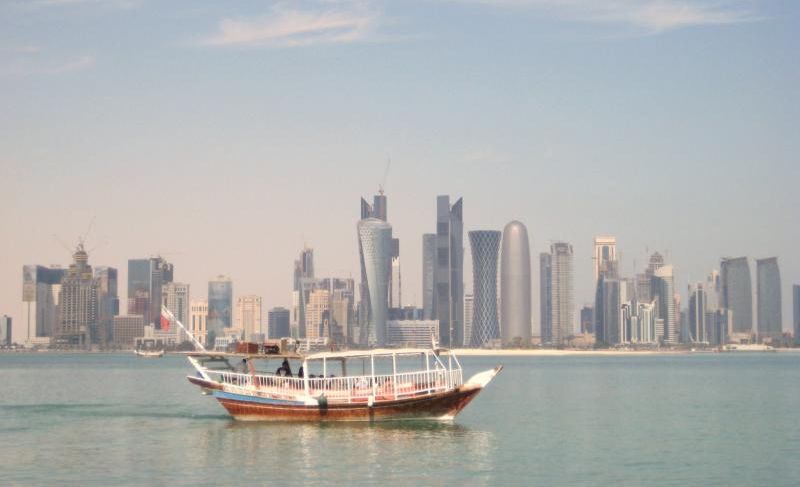 Eric Li ('95), our Middle East Correspondent, reported from Qatar:
Before the announcement of the hosting country of FIFA2022, I am sure not many of us aware of the State of Qatar. Qatar is a small country and majority of the population are residing in Doha, the capital city of Qatar. Because of the reservation of natural gas and petroleum, Qatar has the highest GDP per capita in 2010. The country is still developing and you will find thousands of construction sites in Doha. Qatari loves sports and they usually offer great deals to sport fans. It's hard to believe I spent only CAD$25 in total for watching 2 semi-finals, double final and the single final of the Qatar Open (Tennis). Tickets for Asian Cup (football) are really inexpensive (from CAD$5 to CAD$25). Food is great here if you are a lamb lover but don't expect you will get any great Chinese cuisine here. Winter is wonderful here but the summer is really hot (close to 50C in the daytime and 40C in the evening + humidity). View pictures here.